
Insertion Depth
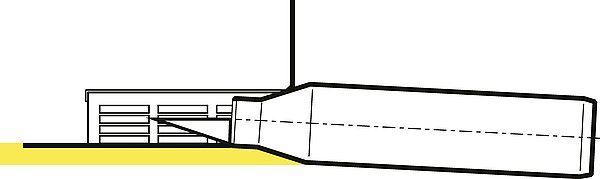
For a parapet drain, the design feature insertion depth indicates the installation depth of the drain body within the roof construction.
A small insertion depth reduces possible thermal bridges caused by the drainage pipe located inside the roof construction.
A greater insertion depth can achieve a higher discharge from the roof, so that fewer drains may be required.
The insertion depth is specified in millimetres (mm) and refers to the depth of the drain body below the top edge of the fixed or adhesive flange.
Minimum Insulation Thickness
Minimum insulation thickness usually refers to the height of the thermal insulation below the drain at the low point. At the low point the thermal insulation can be higher than, equal to or lower than the insertion depth of the drain. The insertion depth of the drain is therefore often taken into account as an important design feature when selecting the drain.
On insulated roofs, the drain body is preferably set into the thermal insulation without the drain body having to penetrate the roof construction.
On cold roofs or inverted roofs, by contrast, it is common practice to set the drain into the roof construction.