
Flange types
LORO-X connection flanges of drains for jointing with the roof waterproofing
Parapet drains, flat roof drains and balcony drains must be connected watertight to the existing balcony or roof waterproofing so that rainwater cannot penetrate the roof structure. For the various waterproofing membranes made of bitumen or plastic, as well as for liquid plastics and watertight concrete, the LORO drains offer optimised flange types for each application.
In the standard DIN EN 1253-2 3.14, connection flanges are defined as a "separate or integral part of a drain body or trap to receive a waterproofing membrane or a liquid-applied roof waterproofing". In principle, the following flange types for sealing drains are distinguished:
- Adhesive flanges with a surface for bonding waterproofing membranes or liquid plastics.
- Clamping flanges as a fixed and loose flange construction, between which waterproofing membranes are clamped.
- Connection collars which only have to be bonded to the waterproofing on site.
- Without waterproofing flange for embedding in watertight concrete, optionally with a puddle flange.
Flat roof guideline and installation instructions
For installation and waterproofing, the technical rule for roofs with waterproofing (flat roof guideline) is often consulted. In addition, the installation instructions of the manufacturers of the drains, waterproofing membranes and liquid plastics used must be observed in particular, as these may list additional material-specific requirements.
Heat resistance: According to DIN EN 1253-2 4.7.2 - behaviour with hot bitumen or asphalt - drains and adhesive flanges must be resistant up to a temperature of (220±5) °C in order not to melt when processed with a burner. This requirement is deemed to be fulfilled for drains made of steel or stainless steel.
1. Adhesive flanges
made of hot-dip galvanised steel or stainless steel
With a so-called adhesive flange, the roof waterproofing is connected watertight to a surface, e.g. made of hot-dip galvanised steel or stainless steel, using bonding technology. Usually bituminous membranes (by "torching") or liquid plastics (by chemical bonding) are sealed with adhesive flanges.
The product standard DIN EN 1253-2 is used for the design of the adhesive flange, in which the dimensions of the connection flanges are regulated (Table 4 - connection flanges). Since the minimum dimensions for bituminous membranes, plastic membranes and liquid plastics differ, the "largest minimum dimensions" are usually maintained for all application areas, unless the application areas are explicitly restricted in the article data.
1.1 Adhesive flange with 45 degree upstand

Adhesive flanges with a 45 degree upstand are usually used in parapet drainage in conjunction with bituminous membranes and a wedge, so that the flange can adapt optimally to the existing parapet wedge. "At the transition from the roof to the rising structural component, a wedge, e.g. made of insulation material, should be provided to ensure better joining technology." (Source)
45 degree adhesive flanges are available in the following series:
1.2 Adhesive flange with 90 degree upstand
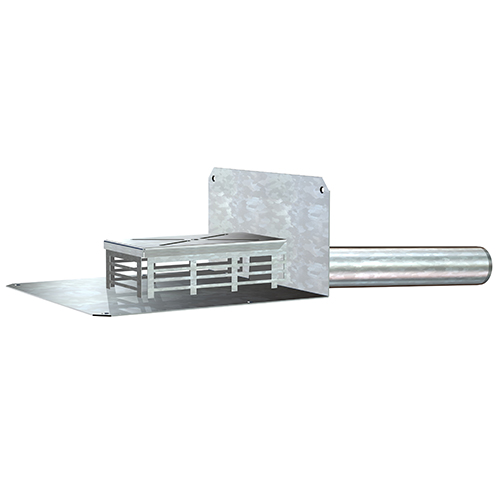
Adhesive flanges with a 90 degree upstand are usually used in parapet drainage in conjunction with liquid plastics when no parapet wedge is used. Especially on smaller or used roof areas (e.g. roof terraces), this flange type can be used in a particularly space-saving way on rising structural components.
90 degree adhesive flanges are available in the following series:
- Series 43 Attika-Direkt
- Series V-AK balcony drainage
1.3 Adhesive flange without upstand
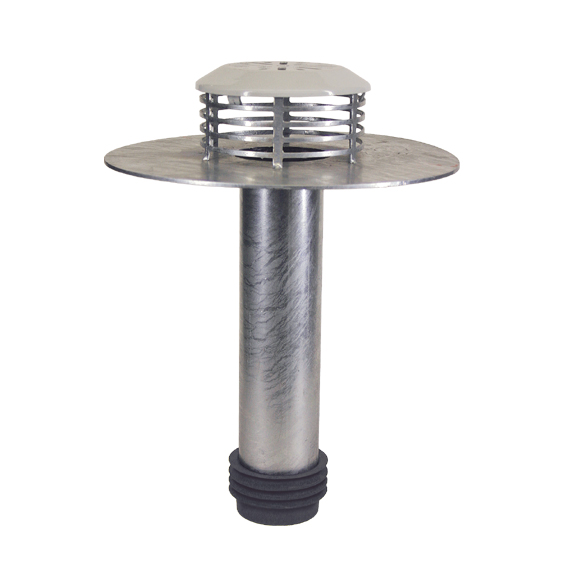
Adhesive flanges without an upstand are usually used for vertical flat roof drains in combination with bituminous waterproofing membranes or with liquid plastics.
Adhesive flanges without an upstand are available in the following series:
- Refurbishment drain flat roof drainage with adhesive flange
- Series V-FL balcony drainage for liquid plastic
- LX-Light flat roof drainage
1.4 Adhesive flange for folding spouts

Adhesive flanges for folding spouts consist of a "vertical" bonding surface. With some spouts, the adhesive flange can be folded on site by up to 90 degrees as required, e.g. to determine the height of the emergency drainage on site. They are usually used in conjunction with liquid plastics (folded) or bituminous membranes (straight bonding surface).
Adhesive flanges for folding spouts are available in the following series:
- VARIOKANT spout
- rectangular spout
2. Clamping flanges
Clamping flanges as a loose and fixed flange construction are ideally suited for sealing the drain into waterproofing membranes or connection membranes. Additional compression seals are arranged below the connection membrane on the fixed flange.
Some manufacturers of plastic membranes require a second compression seal above the waterproofing membrane to protect against damage (e.g. Sarnafil). The 3 mm thick compression seal is arranged below the membrane on the fixed flange and the 2 mm thick compression seal above the membrane, under the loose flange. See also the application examples DRAINLET and Attika-RAINSTAR (PDF).
If an emergency drainage with a weir (damming element) is used in conjunction with a sanded bituminous membrane, care must be taken to ensure that the sanding does not allow water to flow below the loose flange into the emergency drainage and to the outside.
2.1 Clamping flange with 45 degree upstand

Clamping flanges with a 45 degree upstand are usually used in parapet drainage in conjunction with bituminous membranes, so that the flange can adapt optimally to the existing parapet wedge. "At the transition from the roof to the rising structural component, a wedge, e.g. made of insulation material, should be provided to ensure better joining technology." (Source)
Available in the following series:
- Series 62 Attika-DRAINJET without intervention in the roof
- Series 79 RAINSTAR Standard
- Series 89 RAINSTAR with low intervention depth
- parapet balcony drains
2.2 Clamping flange with 90 degree upstand
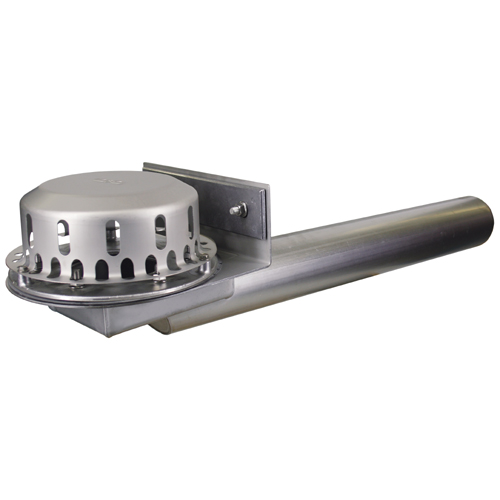
Clamping flanges with a 90 degree upstand are usually used in parapet drainage in conjunction with plastic membranes, as these can be laid at a 90 degree angle due to their material properties and usually do not require a wedge (see bituminous membrane).
Available in the following series:
- Series 79 RAINSTAR Standard
- Series 89 RAINSTAR with low intervention depth
- Series 62 Attika-DRAINJET without intervention in the roof
- parapet balcony drains
2.3 Clamping flange without upstand (parapet)

Clamping flanges without an upstand are used "universally" in parapet drainage in conjunction with bituminous membranes or plastic membranes, in order to enable a variable distance to the parapet with the laterally outgoing drain pipe (Attika-Distant).
Available in the following series:
2.4 Clamping flange without upstand (flat roof)
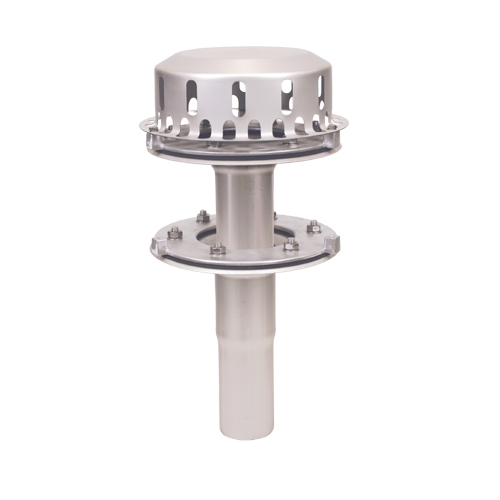
Clamping flanges are usually used for vertical flat roof drains in combination with bituminous or plastic waterproofing membranes. Since all bituminous and plastic membranes can be clamped, the choice of waterproofing membrane does not yet have to be determined when planning the flat roof drains, and they are therefore characterised by maximum flexibility.
Available in the following series:
2.5 Clamping flange with upstand (flat roof)
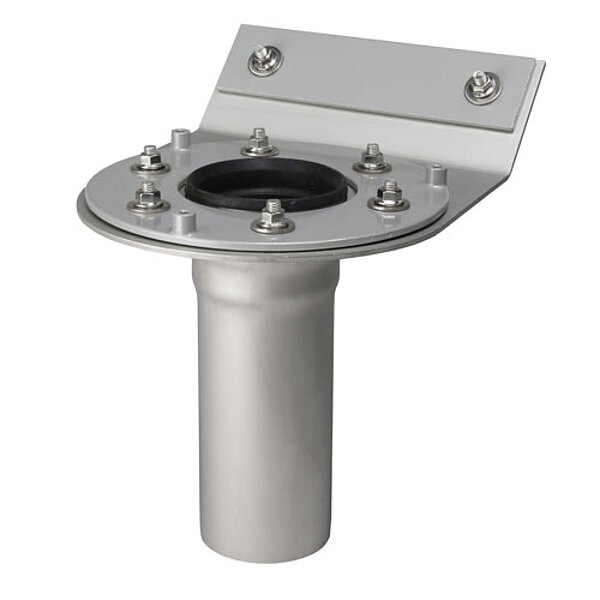
Clamping flanges with an upstand for vertical flat roof drains or pipe penetrations serve as an installation aid for connecting to rising structural components. They are usually used when the clearance dimension to rising structural components is to be kept as small as possible.
Available in the following product groups:
- Series 84 DRAINLET flat roof drainage
- pipe penetrations
2.6 Clamping flange with lowered loose flange
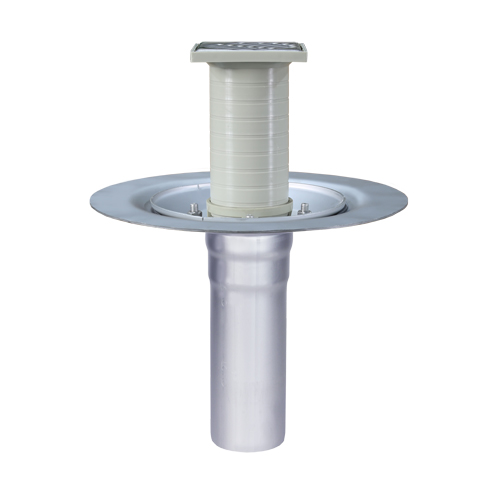
Clamping flanges with a lowered loose flange on balcony drains are used for balconies with waterproofing membranes. The lowering prevents residual water on the balcony.
Available in the following series:
3. Connection collars
Collar connected to the drain at the factory
Fast and reliable installation: Drains with a factory-fitted connection collar often enable the fastest installation on the construction site, thereby reducing construction time and costs. The drain is already supplied with the matching collar and only has to be connected to the existing waterproofing on site. Installation is simple and requires no additional tools, so that the risk of installation errors and leaks is significantly reduced.
Clean connection: The connection collar helps to ensure that the flat roof drain is aesthetically integrated into the roof, since connecting the waterproofing membrane to the drain body on site is more demanding than when these are joined under industrial conditions with standardised quality control. There is no need for on-site cutting and the connection collar is often made of elastic material that can adapt to various details on the construction site and "forgives" small unevennesses in the roof structure.
Matching material: However, it must be specified when ordering the drain which waterproofing membrane is used on the roof surface, so that the matching material of the connection collar can be incorporated at the factory. For project-specific collars, stock items are often not available. However, this minor additional effort during ordering facilitates and accelerates processing on the construction site, especially with higher quantities.
3.1 Connection collar (flat roof)
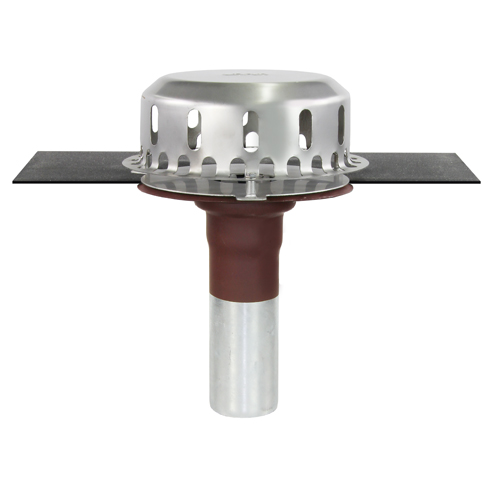
Connection collars are usually attached at the factory to flat roof drains with a bitumen-compatible material. If a special material for the waterproofing membrane is specified when ordering, the available connection collars are attached at the factory in the desired material on an order-related basis.
Available in the following series:
- Series O with connection collar
3.2 Connection collar (balcony)
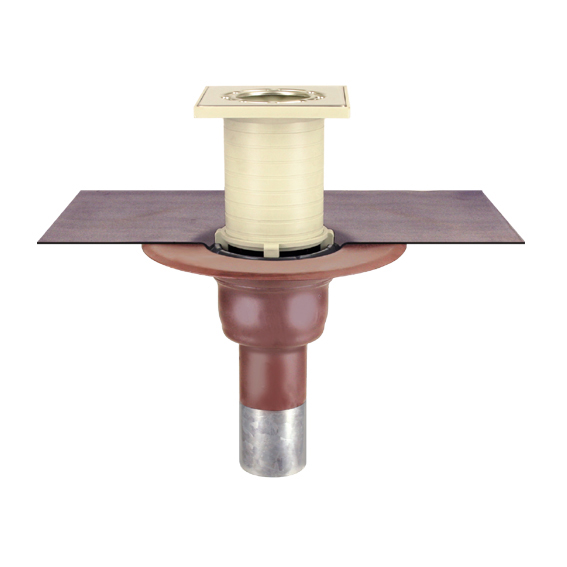
Connection collars are usually used on balcony drains for balconies with waterproofing membranes. If a special material for the waterproofing membrane is specified when ordering, the connection collars are attached at the factory in the desired material on an order-related basis.
Available in the following series:
4. Without waterproofing flange
4.1 With supporting rim
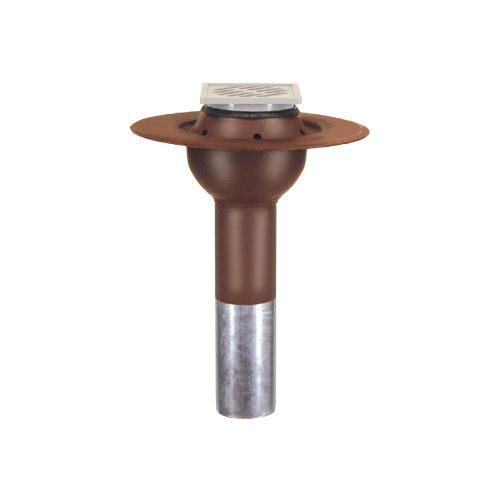
Supporting rims on balcony drains are usually used for balconies without waterproofing membranes with mastic asphalt, prefabricated screed or tiling in a mortar bed and serve as a support for the drain against slipping.
Attention: A supporting rim is not an adhesive flange and is not suitable for waterproofing membranes due to its small surface area!
Available in the following series:
4.2 Without supporting rim
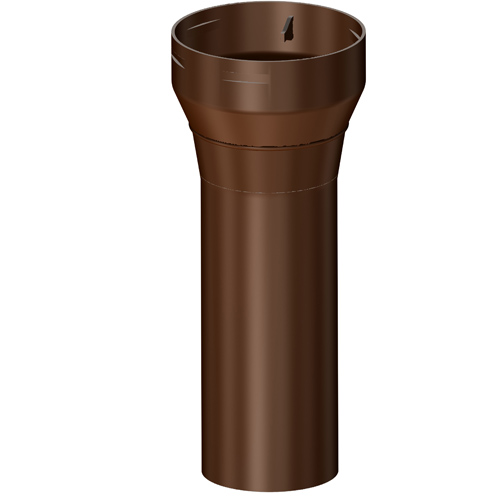
4.3 With puddle flange for watertight concrete

Puddle flanges for watertight concrete (WU concrete) can be combined with parapet drains, flat roof drains and pipe penetrations if the roof or the parapet upstand is made of watertight concrete (WU concrete) and no further waterproofing membrane is present.
- pipe penetration for watertight concrete
Combinable with the following series: