
Storage
The good corrosion protection provided by hot-dip galvanizing is based on the formation of protective surface layers that develop on the surface of hot-dip galvanized steel parts over several weeks or months due to weathering effects.
However, the protective layers so important for the corrosion protection effect of zinc cannot form if the zinc surface is wetted with water containing no or very few minerals for an extended period, or if air access and thus the supply of CO2 is insufficient.
Covering galvanized steel parts stored outdoors with tarpaulins or foils usually causes more harm than good. Moist air accumulates under the covers, and condensation forms in the moisture-saturated air.
In such cases, so-called "white rust" forms on the surface of galvanized components. White rust has no precisely defined composition as it depends on the respective formation conditions. In practice, white rust can develop on freshly hot-dip galvanized parts when protective surface layers have not yet formed initially.
The staining can be removed mechanically (stainless steel brush, steel wool) or with a washing brush and warm water - possibly with cleaning agents.
White rust may affect the visual appearance of galvanizing, but not the galvanizing protection. Over several months, the appearance of the fresh hot-dip galvanizing will change to a light gray tone, and the desired individual galvanizing pattern (zinc patina) develops.
Transport
The delivery must be inspected promptly upon receipt.
LORO-X products must generally be stored dry and ventilated.
Condensation must be avoided at all costs (do not store under plastic tarpaulins or similar). Also ensure that no standing water accumulates in pipe bundles.
Goods packed in bags must be opened immediately. This also applies to bags delivered in E-pallets or mesh boxes.
White Rust
White rust formation may affect the visual appearance of a galvanized surface, but it should be noted that the existing silver sheen of a freshly galvanized surface will change to a light gray tone after a few months. Due to the existing internal coating, "internal white rust formation" is not possible. The functional reliability and service life of pipes, fittings and seals are not affected by external white rust formation.
Heavy white rust could form if components are stored for extended periods after galvanizing under unfavorable, moist conditions without adequate ventilation. Otherwise, there is a risk that additional moisture will be absorbed, which further promotes the formation of white rust.
The Association of Hot-Dip Galvanizers has published a fact sheet on the term "white rust" from which we quote some passages:
"The occurrence of white rust is not a measure of the quality of galvanizing and cannot be influenced by the galvanizer. Zinc is inherently a base metal. It only achieves its good corrosion-preventing effect by forming protective, adherent surface layers when reacting with its environment. White rust formation generally does not impair the normal usability of hot-dip galvanized steel, as light white rust is converted into protective surface layers under the influence of atmospheric carbon dioxide."
Sealing Elements
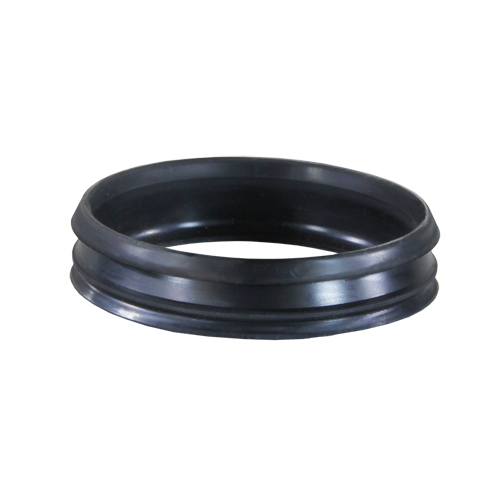
The standard DIN EN 681-1 contains recommendations for the storage of sealing elements made of EPDM. At all intermediate stages between manufacture and use, the seals must be stored according to the recommendations of ISO 2230. EPDM seals belong to "Group C rubbers" and can initially be stored for 10 years, and after inspection of the seals, for a further 5 years.
The following points should be observed during storage:
- The storage temperature should be below 25°C, preferably below 15°C.
- The seals should be protected from light, especially from strong sunlight and from artificial light with a high ultraviolet content.
- The seals should not be stored in a room containing equipment that can generate ozone, e.g. mercury arc lamps or high-voltage electrical equipment that can cause sparking or silent electrical discharges.
- The seals should be stored relaxed, i.e. without tension, pressure or other deformations; they should not, for example, be hung from any part of their circumference.
- The seals should be kept clean.