
Frost and Trace Heating
Installation at sub-zero temperatures
In our assessment, LORO-X steel drainage pipes can be processed without problems in the European climate. Special measures are only necessary when handling sealing elements and lubricant at sub-zero temperatures during installation: These must be stored in warm rooms before installation at outside temperatures below zero and protected from frost until shortly before use. The LORO-X lubricant can be processed without problems in the temperature range from -10° to +50° C, taking the previous point into consideration.
Trace Heating
Requirements of DIN 1986-100 section 6.3.4 trace heating
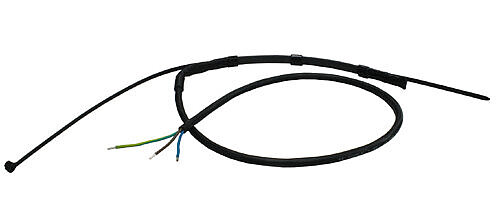
"If ice and snow can block drains, internal gutters and pipes, and this could allow water to enter the building or endanger the structural stability of the roof construction, trace heating should be installed." (DIN 1986-100 6.3.4)
LORO-X heating cable for drains and pipes: If frost risk is identified, measures can be taken. LORO offers, for example, various heating cables for drains, steel drainage pipes and composite pipes. Compared to other pipe materials, steel does not crack as quickly. Other materials crack particularly at the seam. With steel drainage pipes, more attention must be paid to ensuring that the sockets do not slide apart when frozen and filled with water.
Frequently Asked Questions about Trace Heating
When is an area considered frost-prone?
The standard does not provide a specific guideline as to under what conditions a "frost-prone area" exists, or when trace heating should be provided. Whether an area is classified as "frost-prone" depends on the structural conditions on site and must therefore be assessed by the planner or installer. For pipes installed inside a building, trace heating is usually not necessary.
Green roofs and retention roofs tend to have "long drainage run-off", which can lead to increased frost risk in external downpipes on shaded sides, particularly when weather conditions change (rain/frost).
Downpipes on the shaded side?
Experience shows that an inspection is recommended if the roof drain heats up due to direct sunlight while the downpipe is located externally on the shaded side, so that meltwater from the roof drain could freeze in the downpipe. For downpipes connected to an underground drain, it is assumed that the warm sewer gases significantly reduce the effects of frost.
Branch lines and offsets?
For longer branch lines in frost-prone areas, thermal insulation may be required. It must be checked on a project-specific basis whether additional electric trace heating should also be provided.
Where is the trace heating installed?
Basically, the trace heating must be installed according to the manufacturer's instructions for the respective product. LORO offers special heating solutions for drains, pipes and composite pipes. Preferably, the trace heating is installed outside the pipe or drain. Depending on the situation, a heating cable can also be provided inside.
Is drainage affected by the trace heating?
If trace heating is installed inside the pipe or drain, it must be checked on a project-specific basis for siphonic flow whether a significant effect on drainage is to be expected. The larger the cross-section of the heating cable relative to the pipe cross-section, the greater the expected effect. For nominal diameters below DN100, consultation with the manufacturer is always required. If trace heating is installed inside the pipe or drain, no significant impairment of drainage is to be expected for gravity flow.
What is the power consumption of trace heating?
Power consumption depends on the local and structural conditions of the building and can be calculated or estimated on a project-specific basis from the information in the installation instructions. A detailed description for installation and electrical connection can be found in the installation instructions for LORO-X roof drains with heating.
Is an additional thermostat necessary?
Our heating is a self-regulating heating cable that does not necessarily require an additional thermostat. However, we recommend providing one for energy reasons, as it switches on and off depending on the respective temperature.