
Products for installation behind the facade
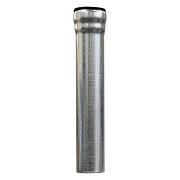
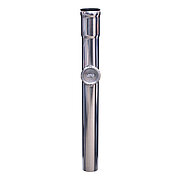
LORO-X Steel discharge pipes behind the facade
backflow-proof, break-proof, pressure-resistant and approved for internal areas
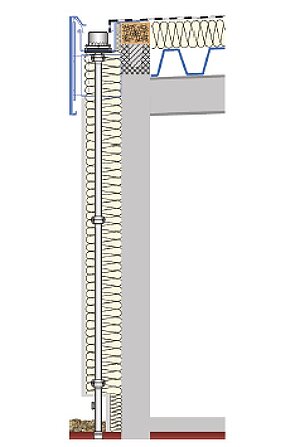
Whether internal gutter drainage or parapet drainage, more and more downpipes are being installed behind the facade and in the thermal insulation composite system for aesthetic reasons.
Not every pipe is suitable for this purpose. Here, backflow-proof, break-proof and pressure-resistant LORO-X steel discharge pipes demonstrate their strength, as they are also approved for internal areas.
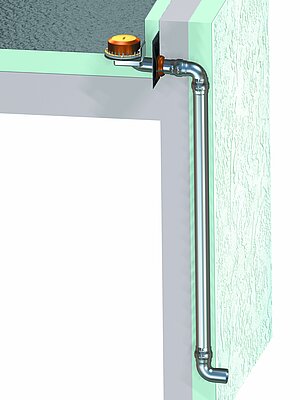
Downpipe between inside and outside
Downpipes behind the facade combine the advantages of internal and external drainage:
1. No penetrations through the roof and
2. no visible downpipe in front of the facade!
LORO-X siphonic drainage systems with small nominal diameters are ideal for this application. (e.g. DN 50 or DN 70)
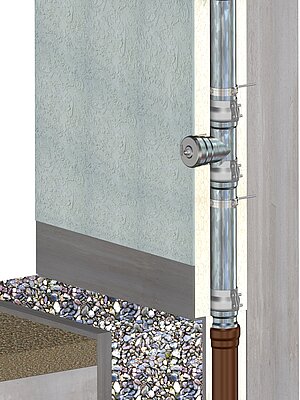
Cleaning opening in the facade
According to DIN 1986-100, a cleaning opening is also required before rainwater is discharged into the ground pipe.
This could be a problem for downpipes installed in the facade, as most cleaning openings in rainwater standpipes do not protrude far enough.
This problem can be solved with a LORO-X 87° branch and a LORO-X sealing plug with screw closure.
Extension pipe for HSÜ and cleaning opening
The LORO-X HSÜ (High-Performance Safety Overflow) can now also be used for downpipes behind the facade with the new extension pipe! The standard pipe stub has a length of 150mm, which is sufficient for most facade constructions. On request, the extension pipe can also be manufactured as a custom solution in project-specific lengths. As an alternative to the HSÜ, the extension pipe can also be used with a closed cleaning cover for cleaning and maintenance of the downpipe behind the facade.
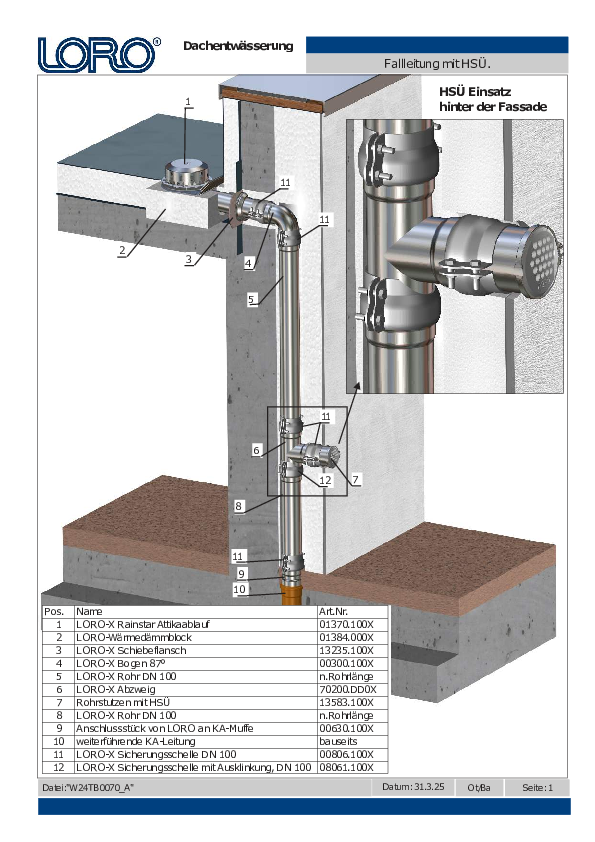

Practical tips for downpipes behind the facade
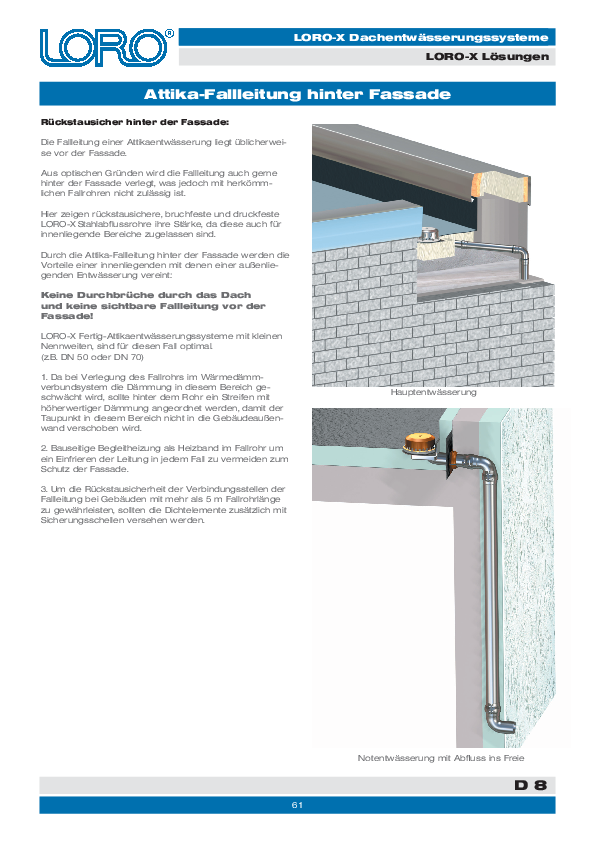
- Since the insulation is weakened in the area where the downpipe is installed in the thermal insulation composite system, a strip of higher-quality insulation should be placed behind the pipe to prevent the dew point from shifting into the exterior wall of the building.
- In frost-prone areas, according to DIN 1986-100 and in consultation with the building owner, an on-site trace heating system should be provided to prevent the pipe from freezing and protect the facade. Trace heating should not be installed in pipes smaller than DN 70, as this would make the pipe cross-section too small. In this case, external trace heating should be considered.
- To ensure backflow safety at the connection points of the downpipe in buildings, the connection points should additionally be secured with safety clamps.
- To avoid condensation, our LORO-X composite pipes can be used where space permits. Alternatively, on-site insulation can be applied.